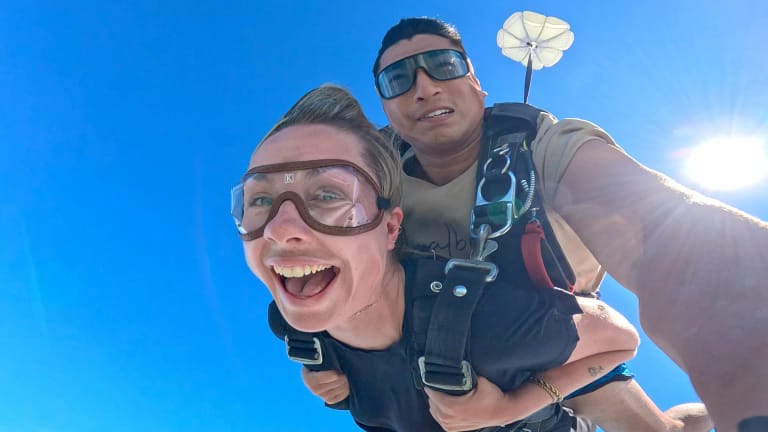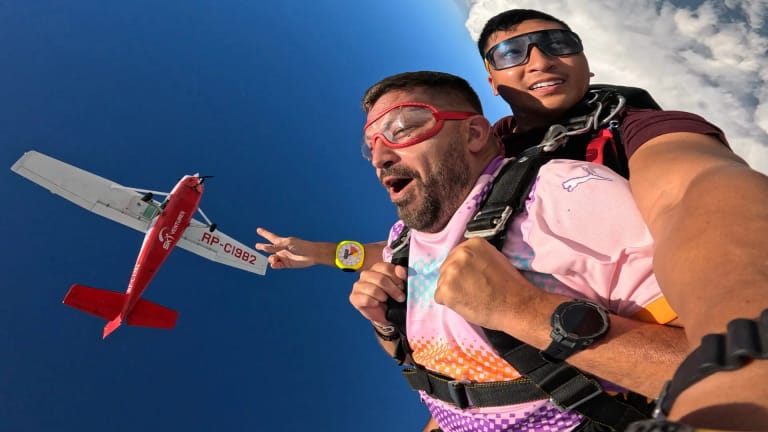
Palawan is a diving destination first and a skydiving destination second, so a lot of our guests arrive with nitrogen still in their blood from Coron's wrecks or El Nido's reefs. Diving and skydiving go together beautifully on the same trip — but not on the same day. Here is how long to wait, why, and how to plan an itinerary that fits both.
The rule in one line
Wait at least 24 hours after your last dive before you skydive. After multiple dives a day, several days of diving, or any decompression dive, treat 24 hours as the minimum, not the target.
Why You Cannot Skydive Right After Diving
Every dive loads your tissues with dissolved nitrogen. Back on the surface it leaves slowly through your lungs over many hours. Reduce the pressure around you before that is done — by going up in an aircraft — and the nitrogen can come out of solution as bubbles in your blood and joints. That is decompression sickness, and it is why every dive agency tells you not to fly straight after diving.
Skydiving is the same problem, only sharper. A pressurised airliner cabin sits at the equivalent of about 1,800 to 2,400 metres. A jump plane is unpressurised and climbs to 10,000 feet — over 3,000 metres — in around 20 minutes, then you exit into freefall. The pressure drop is larger and faster than any commercial flight, which is why dropzones apply the same waiting periods as flying, and usually round them up.
What the diving agencies say about flying
Single no-decompression dive
Minimum 12 hours before flying (DAN and PADI guidance).
Multiple dives per day, or several days of diving
Minimum 18 hours — many instructors say 24.
Dives requiring decompression stops
Substantially longer than 18 hours; 24 hours or more.
Those figures are written for an 8,000 ft cabin altitude. A skydive goes higher and decompresses faster, so Skydive Palawan asks every guest for a full 24 hours after any dive. On the waiver you will be asked when you last dived — answer it honestly, because there is no way for us to check and the person it protects is you.
Does the Order Matter? Skydive First, Dive After
Yes — and it makes the whole problem disappear. Skydiving before diving carries no decompression risk at all: you go up, you come down, and you are back at sea level with normal nitrogen levels. You could jump in the morning and be on a dive boat that afternoon. So if your itinerary is flexible, put the skydive at the start of the trip or on the day you arrive in San Vicente, and save the diving for afterwards.
The only reason most people do it the other way round is geography: Coron and El Nido are the diving hubs, San Vicente is the dropzone, and many routes run north to south. That is fine — it just means building in a rest day.
Sample Itineraries That Fit Both
El Nido diving → San Vicente skydive
- 1Day 1–2: Dive El Nido's reefs (last dive by early afternoon on day 2)
- 2Day 3: Rest day — Nacpan Beach, the Big Lagoon by kayak, or simply the transfer south to San Vicente
- 3Day 4: Morning skydive over Long Beach (well over 24 hours since your last dive)
Skydive first, then Coron wrecks
- 1Day 1: Fly into Puerto Princesa, van to San Vicente
- 2Day 2: Skydive in the morning slot, afternoon on Long Beach
- 3Day 3+: Continue to El Nido, then Coron for the WWII wrecks — no waiting period needed
Port Barton base (diving and skydiving 24 km apart)
- 1Day 1: Island hopping and a reef dive from Port Barton
- 2Day 2: No diving — snorkel, hike, or take the day off
- 3Day 3: 40-minute transfer to San Vicente Airport for a morning skydive, back in Port Barton by lunch
For a fuller day-by-day plan around the jump, see our Palawan itinerary with skydiving — and if the Coron wrecks are on your list, Diskubre Palawan's guide to diving the Coron WWII wrecks covers the sites, depths, and how many days you need.
Other Things to Know
Snorkelling and freediving
Breath-hold snorkelling on the surface does not load nitrogen and needs no waiting period. Deep freediving with repeated dives is a grey area — leave a night's sleep between it and the jump.
Flying into Palawan the same day
If you dived elsewhere and then flew to Palawan, the flight counts as your first decompression — good. The 24-hour clock still runs from your last dive, not from the flight.
Tell us when you book
If you are diving in the days before your jump, mention it in the booking notes. If the timing is tight we will move you to a later slot or the next day at no charge, rather than turn you away on the morning.
Symptoms after diving
Joint pain, unusual fatigue, rash, dizziness or tingling after a dive are signs of decompression sickness. Do not skydive — see a doctor and contact DAN. The jump can wait.
Diving and Skydiving: Quick Answers
How long after scuba diving can you skydive?
Wait at least 24 hours after your last dive. Dive agencies require 12 hours after a single no-decompression dive and 18 hours after multiple dives before flying at 8,000 ft; a jump plane climbs to 10,000 ft unpressurised, so Skydive Palawan applies a flat 24-hour rule for every guest.
Can you skydive and scuba dive on the same day?
Only in one order: skydive first, dive afterwards. A skydive before diving carries no decompression risk. Diving first and then skydiving the same day is unsafe and is not permitted.
Why is skydiving after diving more dangerous than flying after diving?
A jump plane is unpressurised and reaches 10,000 ft in about 20 minutes, a bigger and faster pressure drop than a commercial cabin at 8,000 ft. Residual nitrogen from diving can form bubbles faster, raising the risk of decompression sickness.
Does snorkelling count as diving for the 24-hour rule?
No. Surface snorkelling does not load your tissues with nitrogen, so you can snorkel and skydive on the same day. Repeated deep freediving is best kept to a separate day from the jump.
Ready to Take the Leap?
Skydive first and dive afterwards if you can. If you dive first, never skydive the same day — keep at least 24 hours between your last dive and your jump. Plan the jump for the morning after a rest day and you get both of Palawan’s signature adventures without compromising either.