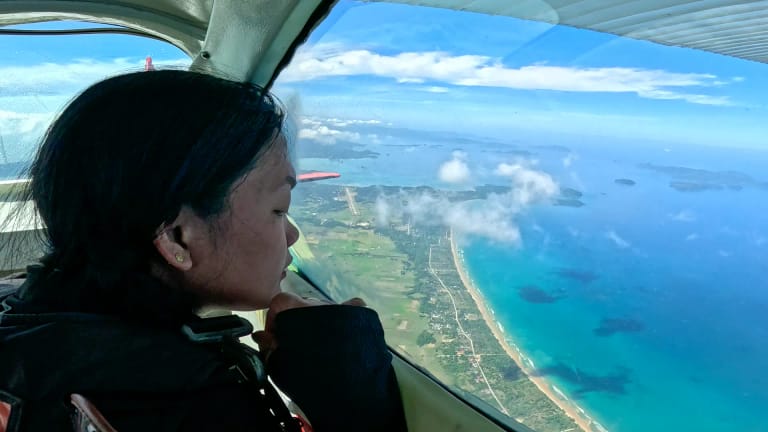
Skydive Palawan flies all year round, but not every month feels the same from the door of the plane. This guide walks through the two monsoons that shape Palawan's weather, what each month typically looks like over San Vicente, which time slot to book, and what happens — to your jump and to your money — when the weather says no.

The short answer
Skydive Palawan operates every month of the year, and even in the rainy season mornings usually bring calm winds and blue skies. February to April are the driest months; from June to November, book the morning slot.
Two Monsoons, Two Seasons
Palawan's weather is set by two seasonal winds. The amihan, the north-east monsoon, blows from roughly November to May and brings cool, dry, stable air — this is the dry season. The habagat, the south-west monsoon, takes over from around June to October, pushing warm, moist air onto Palawan's west coast. San Vicente and Long Beach face west, straight into the habagat, which is why the wet season is felt more here than on the east coast.
Palawan sits south-west of the main typhoon track, so direct typhoon hits are rare. What the wet season brings instead is a pattern: clear or partly cloudy mornings, building cloud around midday, and showers or a squall in the afternoon. That pattern is the single most useful thing to know when you book.
Skydiving Weather in Palawan, Month by Month
January
ExcellentPeak dry season. Cool amihan breeze, low humidity, long clear spells. The busiest month at the dropzone — book early.
February
ExcellentThe driest month of the year. Calm air, crisp visibility all the way to the islands. Our favourite month to jump.
March
ExcellentDry and warming up. Superb visibility and light winds; occasional afternoon haze from the heat.
April
ExcellentHottest month, still very dry. Morning slots are more comfortable; Holy Week is busy across Palawan.
May
Very goodTransition month. Mostly dry with the first afternoon thunderstorms late in the month. Mornings stay reliable.
June
GoodHabagat arrives. Wetter afternoons, but mornings often open clear. Fewer visitors, easier to get your preferred date.
July
Fair to goodWettest stretch begins. Expect some days lost to weather; keep a buffer day and book the morning slot.
August
FairPeak of the wet season on the west coast. Jumpable mornings still come — often spectacular between systems — but flexibility matters most this month.
September
Fair to goodStill wet, gradually easing. Dramatic skies and empty beaches for those who plan around the showers.
October
GoodThe habagat weakens. More dry days, calmer seas, and the dropzone is quiet.
November
Very goodAmihan returns. Fresh, drier air and steadier conditions; a great value month just before peak season.
December
ExcellentDry season proper. Clear mornings, festive crowds from the third week — reserve well ahead.
For what the weather means for the rest of your trip — boat tours, ferries, island hopping — Diskubre Palawan's Palawan month-by-month guide is the best companion to this page.
Morning or Afternoon? Book the Morning
Skydive Palawan runs two slots: morning flights from 8:00 AM (arrive at San Vicente Airport by 7:30 AM) and afternoon flights from 12:00 PM (arrive by 11:30 AM). In the dry season either works. In the wet season the morning slot is the clear choice — convective cloud builds through the day, so the earlier you fly, the better your odds.
We watch the forecast the evening before every jump day. If the outlook shows a better window in the other slot, we may move you between morning and afternoon and let you know by email and WhatsApp the night before. Coming from El Nido or Puerto Princesa with our transfer? The departure time follows your slot automatically.
What Actually Cancels a Skydive
Rain itself is rarely the deciding factor. The jump needs three things: a cloud base high enough to see the landing area from exit, wind at ground level that a tandem canopy can land into safely, and no active thunderstorms nearby. A grey day with a high cloud layer is often perfectly jumpable; a sunny day with a gusty onshore wind might not be.
Low cloud
We need to see the ground from exit altitude. A low, solid layer over the coast means a hold until it lifts — which in Palawan it often does by mid-morning.
Wind
Strong or gusty surface wind is the most common reason for a hold, and it is why afternoon sea breezes in the wet season matter more than the rain.
Thunderstorms
Any lightning within range grounds the aircraft until the cell has passed. These are usually short and usually in the afternoon.
If the Weather Cancels Your Jump
This is the part most people worry about, so here is the policy in plain terms. If we cancel your jump for weather, you choose: a full refund of everything you have paid for the jump, or a free move to another date. There is no fee and no deduction. The one exception is a transfer you have already used — if the van from El Nido has driven you to San Vicente, that transport cost is not refunded, though we will help rearrange the schedule.
On the day, cancellations are usually not a single decision at 8 AM. We hold, watch the sky, and fly as soon as a window opens — many "cancelled" mornings become 11 AM jumps. That is why a buffer day is the best weather insurance you can buy: if today does not work, tomorrow's morning slot almost always does.
The full cancellation, refund and rescheduling rules are in the before-you-book checklist.
Weather Tips for Your Booking
Palawan Skydiving Weather: Quick Answers
What is the best month to skydive in Palawan?
Any month works. Skydive Palawan operates year-round, and even in the rainy season (June to October) mornings usually bring calm winds and blue skies. February to April are the driest months.
Can you skydive in Palawan during the rainy season?
Yes. The south-west monsoon brings afternoon showers rather than all-day rain, and mornings usually bring calm winds and blue skies. Book the 8:00 AM slot, keep a buffer day, and expect the occasional weather hold.
What happens if my skydive is cancelled because of weather?
You get a full refund of the jump or a free reschedule to another date — your choice. Transport you have already used, such as a van transfer from El Nido, is not refunded.
Does rain cancel a skydive?
Not on its own. Jumps are held for low cloud, strong surface wind, or nearby thunderstorms. Light rain with a high cloud base is often still jumpable; the decision is made on the day.
Ready to Take the Leap?
There is no bad month to skydive in Palawan. February to April are the driest, but even in the wet season mornings usually bring calm winds and blue skies: book the morning slot, leave a spare day, and the jump usually happens — and if it does not, you are refunded in full. Whatever the month, the view from 10,000 ft over Long Beach is worth planning around.